The Port of Vigo is working on the creation of its own brand to guarantee the traceability of fishery products.
Nov 8, 2022, 4:00:00 PM
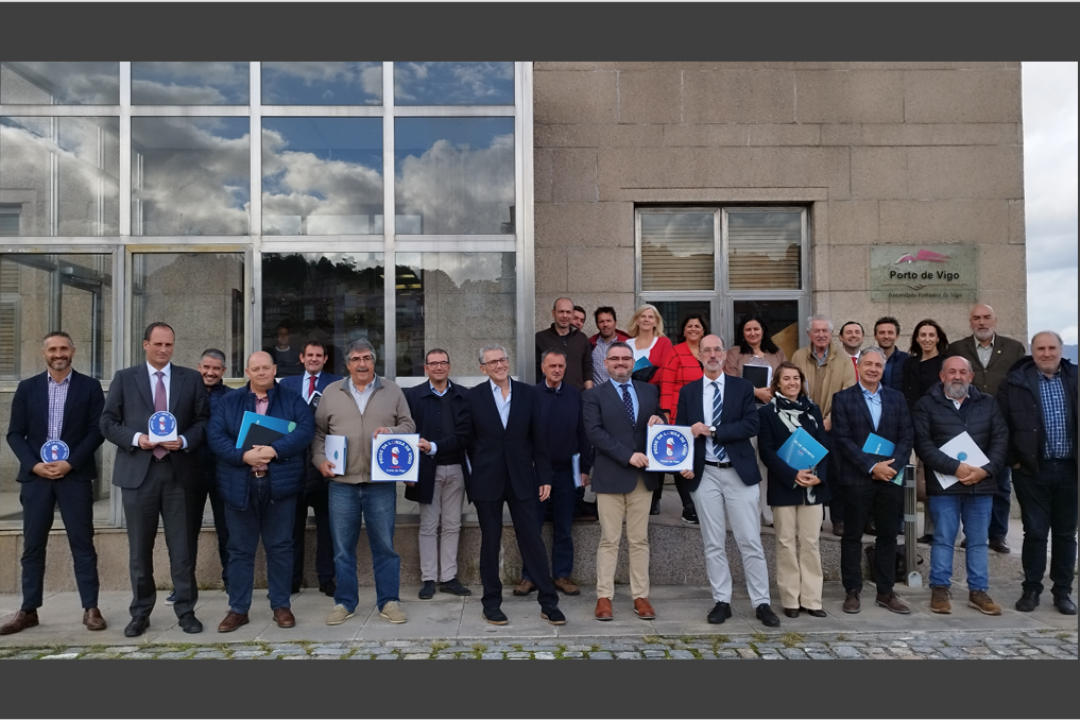
The Fresh and Frozen Commission of the Blue Growth Vigo strategy met this Monday to address the creation of its own brand to ensure the traceability of fishery products, as well as the three new projects approved to the Port Authority of Vigo by the General Secretariat of Fisheries with European funding from the Next Generation funds. This last meeting was attended by more than twenty representatives of the sector.
During the meeting, which took place in the Session Building of the Port of Vigo and was chaired by Jesús Vázquez Almuiña and the General Director of Fisheries, Aquaculture and Technological Innovation of the Xunta, Antonio Basanta, the president of the Port Authority presented the initiative in which his team is working on the creation of a brand image for fishery products and which is part of the blue growth strategy of the Port of Vigo (Blue Growth Vigo) within the project "Lonja 4. 0" and that will contribute to achieve its goal of positioning itself as an Innovative Port.
In this sense, Vázquez Almuiña explained that, in the coming weeks, fish and seafood sold in the city's markets will display signs that will help buyers to ensure that the products purchased come from the Port of Vigo. With this initiative, the terminal intends to take a further step in its commitment to ensure traceability, transparency, quality and sustainability of fish from the fish market in Vigo.
New European projects
The working group also served to put on the table the three projects approved by the General Secretariat of Fisheries, related to areas such as training, the defense of sustainability and cleaning the oceans of plastics.
In this regard, reference was made to the Circazul project, in line with the principles of the circular economy and the zero pollution objectives of the European Green Pact, whose general objective is to prevent and combat marine pollution through the capitalization of information and knowledge generated in projects implemented in recent years, the development and demonstration of systems for the collection and recovery of waste from the fishing sector (mainly plastics) and the promotion of partnerships between the different agents and sectors involved. The project consortium, coordinated by Cetmar, has the participation of the Port of Vigo, the Port of Marín, the Vigo Shipowners' Cooperative (Arvi), the Organization of Fishing Producers of the Port and Estuary of Marín (Opromar) and the University of Cadiz (UCA).
On the other hand, the Bluefishing Training project, which involves academic and private sector actors, focuses on the design and implementation of a sectorial cooperation plan on capacities to improve the competitiveness of the Atlantic extractive fishing sector. Thus, three pilot programs will be carried out to improve the professionalization of the extractive fishing sector, specifically addressing three key sectors of the blue economy in the Atlantic region: inshore and offshore fishing, and port marketing and logistics. APV, ICSEM, Arvi, Plocan and UVigo are collaborating in the project.
Finally, the general objective of the Pláticas project is the creation of a joint work environment between the Knowledge Spaces of the Atlantic Front, through the development of an Interterritorial Platform to support the standardization, integration, management, communication and transfer of knowledge on Crete and the Atlantic Coast, communication and transfer of knowledge on Sustainable Blue Growth in the Regions of the Spanish Atlantic Front, which will serve as a reference to optimize the sustainable management of fishing and aquaculture activities in the Atlantic area, promote intersectoral and interinstitutional collaboration and seek joint solutions to common problems in these sectors in all regions. The project will also establish a roadmap for the future development of the knowledge areas, with the participation of a total of seven entities from the Basque Country (Azti Foundation), Cantabria (Institute of Environmental Hydraulics of the University of Cantabria), Principality of Asturias (University of Oviedo), Galicia (Port of Vigo and Cetmar), Andalusia (University of Cadiz) and the Canary Islands (Plocan).
Related projects