The port community of Vigo creates the first welfare committee of Galicia to improve the quality of life of the people of the sea.
Feb 1, 2023, 5:00:00 PM

A total of
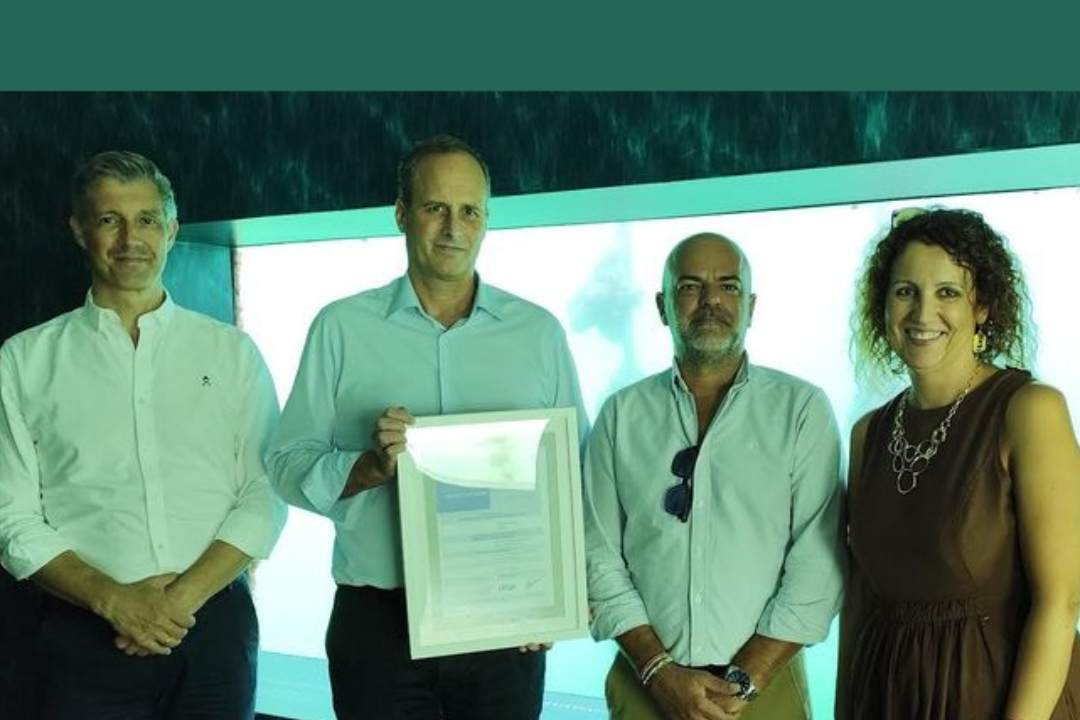
18 institutions of very diverse nature signed this morning the regulations of
the Welfare Committee of the Port of Vigo, the first in Galicia. An organism
born under the umbrella of the sustainable blue economy strategy led by the
Port Authority since 2016 and based on three fundamental pillars: economic,
environmental and, above all, social sustainability.
As
highlighted by the top port official, Jesús Vázquez Almuiña, during the
presentation of the Committee, in which he was accompanied by the conselleira
do Mar, Rosa Quintana, and by the rest of the signatories, the Port of Vigo is
a national leader in sustainability and innovation.
"At
the Port of Vigo we believe in social sustainability and the Welfare Committee
is one more step towards this new reality", he remarked, while affirming
that "Vigo welcomes seafarers as a big family, where nobody is an
outsider".
Multidisciplinary
character
The new
Welfare Committee is the first to be set up in Galicia and on the Atlantic and
Cantabrian coast. It is made up of 18 institutions that give it a
multidisciplinary character and provide a diversity of visions. They are, in
the words of Vázquez Almuiña, "key players" in the maritime world who
know first hand the sector and its needs. In addition, social and business
groups, institutions and State Security Forces and Corps are represented.
The
Committee is based on dialogue and active listening of all its members. An
exercise that brings together different points of view and sensitivities, but
with a single objective: "to improve the quality of life of the people who
work and visit the Port of Vigo" and that has proven to be the best system
of participation for the detection of shortcomings and the search for solutions
in a collaborative manner.
In this
context, the port president wanted to publicly thank the "work and
effort" of the various groups that make up the Committee, such as Stella
Maris "which is the heart of the Committee", the non-governmental
organization for the reception and care of refugees and migrants ACCEM, the
International Trade Union Federation (ITF) which represents the interests of
seafarers around the world, the Cooperative of Shipowners of the Port of Vigo
(ARVI), Fundamar, the Association of shipowners of the Port of Vigo (ARVI);
Fundamar, the Association of Shipping and Stevedoring Companies of the province
of Pontevedra (ACOESPO), the Association of Pilots of the Port and Ría de Vigo,
the Galician Red Cross and the Álvaro Cunqueiro Hospital, "fundamental"
in providing support and services to seafarers, as well as the Instituto Social
de la Marina (ISM), Capitanía Marítima, Salvamento Marítimo, and the State
Security Forces and Corps, in addition to the Port Authority of Vigo and the
Consellería do Mar, which has accepted the Honorary Presidency of this
Committee.
According
to him, "Vigo is the fishing port of reference in Europe and this confers
different needs to those of a commercial port" and, in this sense, the
Welfare Committee is born to "give support" to the crews that spend
long stays in port and whose needs can go from health, social and shelter, help
in administrative procedures, offer them a place to communicate with their
family, etc.
In this
context, the sector highlighted the importance of creating similar bodies in
all the ports of the world where Galician and Vigo ships work and fish, for
which both Vázquez Almuiña and Quintana emphasized that they will propose it
within the network of Blue Ports of the FAO, where Vigo is an example of Blue
Port worldwide.
Example
of social responsibility
For her
part, the conselleira do Mar, Rosa Quintana, put the Port of Vigo as an
"example of social responsibility" by betting on the creation of a Port
Welfare Commission "that places the city at the forefront of port
activity". "We have a common concern which is to bring the importance
of the port to our society, which coexists with its activity and to which we
must guarantee its welfare," he stressed.
In this
line, the holder of the Sea pointed out that the Port Welfare Commission
"is a forum for internal communication and external collaboration with
which to influence the environment in a positive way, with the aim of building
a powerful structure with which to stimulate the confidence of the entire
community." This, he added, makes the Port of Vigo a figure that promotes
relations between the port and the city, "with the aim of coexistence and
dialogue between stakeholders".
A
friendly and healthy port
In the last
two years since the first contact, many activities have been carried out along
these lines, and the creation of the Port of Vigo Welfare Committee is in
itself "the biggest milestone". "From the Port Authority of Vigo
we are working to be a friendly and healthy Port" and an example of this
are the 32 defibrillators, both fixed and mobile, installed by companies and
institutions in different port areas. Likewise, 65% of the workers of the Port
Authority of Vigo have already been trained in cardiopulmonary resuscitation,
thanks to the close collaboration that the institution presided by Vázquez
Almuiña maintains with the Red Cross and the Álvaro Cunqueiro Hospital.