APV and Xunta Commit to Working Together for Zero-Emission Cíes Islands
Sep 28, 2025, 1:00:00 PM
- During a visit by the Port
Authority’s top official, Carlos Botana, and the Regional Minister for
Environment and Climate Change, Ángeles Vázquez
- With an investment of nearly €800,000, the Port
of Vigo has implemented and planned a series of projects focused on
sustainability, safety, and energy efficiency in this natural enclave
- APV plans to replace the lighthouse dome and
rehabilitate the adjoining building for possible use as a museum or
interpretive space
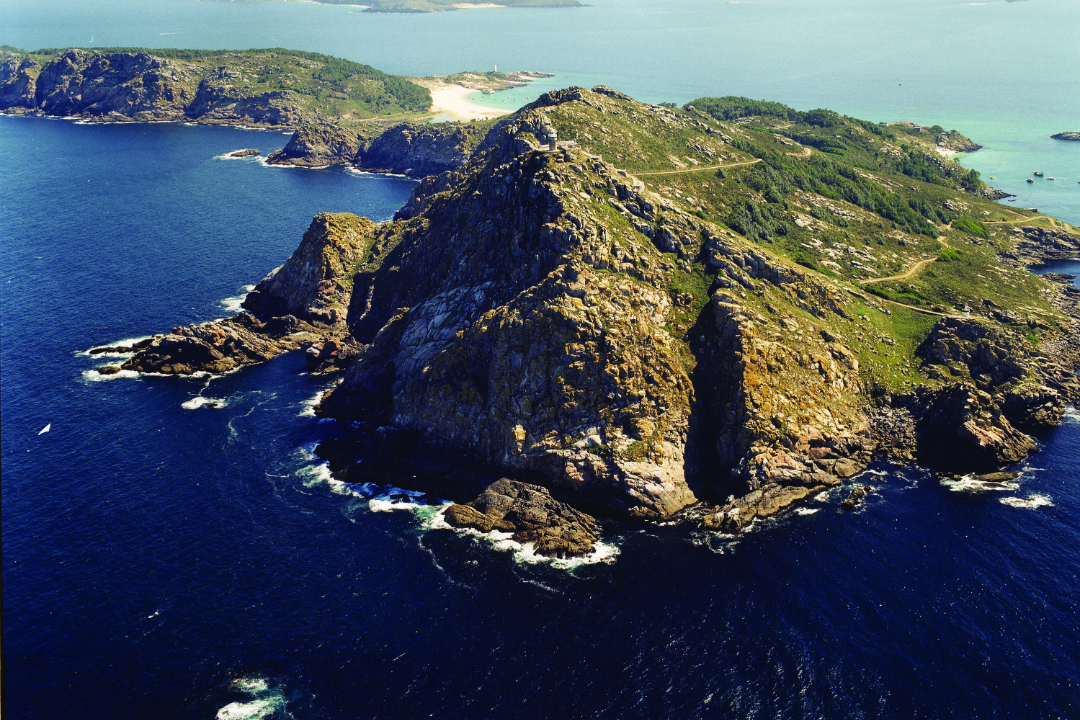
The Port Authority of Vigo reaffirmed this
morning its commitment to protecting and enhancing the Cíes Islands. With a
total investment of €798,000, the Port of Vigo has implemented and planned a
series of projects focused on sustainability, safety, and energy efficiency in
this natural environment. This investment was the central theme of the visit
carried out by the Port Authority’s president, Carlos Botana, and the Regional
Minister for Environment and Climate Change, Ángeles Vázquez.
As Botana himself recalled, the Port Authority
has allocated a significant portion of the funds to projects already completed
and others currently underway. Among the completed actions are the
rehabilitation of pathways, repairs to docks such as Carracido—damaged by tides
and waves—various safety improvements, and measures related to energy
efficiency, such as the installation of a new photovoltaic plant to supply
electricity to the lighthouse, thereby maximizing the performance of the panels
and batteries.
Future projects
Planned future projects include the replacement
of the lighthouse dome—a major undertaking that will involve replacing this
element, deteriorated by the sea. The new dome will be manufactured in sections
and transported and installed with the help of a helicopter.
Likewise, the Port Authority plans to
rehabilitate the building adjacent to the lighthouse for possible use as a
museum or interpretive space.
During their visit to the archipelago, the Port
Authority president and the Regional Minister highlighted the need to achieve
energy self-sufficiency for the Cíes Islands through an ambitious plan that
aims to generate 100% of the islands’ electricity and thermal energy demand
from renewable sources, using any surplus to enable sustainable, zero-emission
mobility with no CO₂ or NOx output. This represents a technological and
sustainability challenge in an area with difficult access and adverse weather conditions.
This initiative aligns with the Blue Economy
strategy of the Port of Vigo, led by Botana himself, who considers it essential
to balance economic development with environmental protection.