THE PORT OF VIGO WELFARE COMMITTEE MAKES PROGRESS IN DEFINING SOCIAL PRIORITIES FOR 2026
Feb 19, 2026, 5:00:00 PM
- The body
analyzed the balance of actions carried out in 2025 and the lines of work
planned for this year.
- Stella
Maris assisted 550 crew members during the past year and the Port Police
collected more than 3,000 toys with its Christmas campaign.
- The
Committee discussed the creation of an operational subcommittee and possible
funding channels for future actions.
The Port of
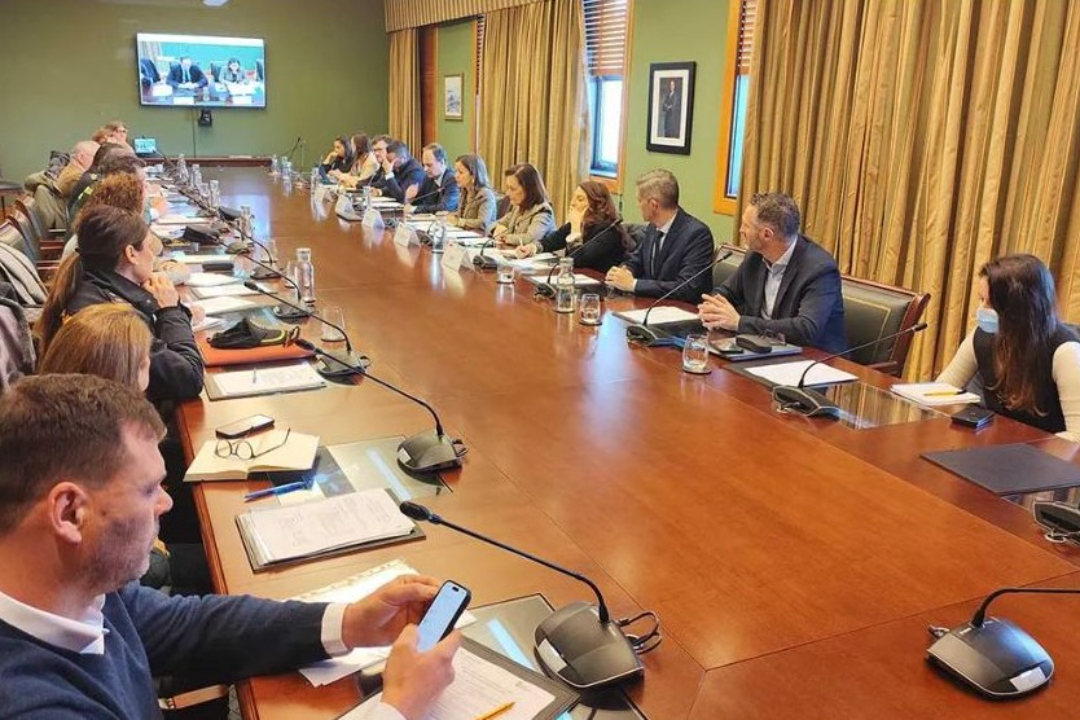
Vigo Welfare Committee, a pioneer in Galicia, held a new working meeting this
morning in which it addressed the main actions carried out throughout 2025 and
made progress in defining the priorities and lines of action for 2026, with a
focus on improving the quality of life of seafarers.
The session
was chaired by the Regional Minister for the Sea, Marta Villaverde, and the
President of the Vigo Port Authority, Carlos Botana, who were accompanied by
the head of Stella Maris Vigo, Elvira Larriba, and the ITF coordinator in
Spain, Luz Baz, as well as the participation of key players in the maritime
world who have first-hand knowledge of the sector and its needs, as well as
social and business groups, institutions, and state security forces.
The
Minister of Maritime Affairs highlighted the importance of continuing to
strengthen the social dimension of ports and stressed that the Port of Vigo
Welfare Committee is a key instrument for “providing real responses to the
needs of seafarers,” thanks to “active listening, knowledge of the territory,
and a shared desire to improve people's quality of life.”
“From the
Xunta de Galicia, we want to highlight this comprehensive vision of the port,
not only as a strategic economic infrastructure, but also as a human, diverse,
and multicultural space,” so “we are committed to continuing to strengthen this
space as a useful, dynamic, and participatory tool, capable of anticipating
problems and offering coordinated responses, always with a focus on people,”
since “only through cooperation and dialogue can we continue to make the Port
of Vigo a benchmark not only economically, but also socially and humanely.”
For his
part, the president of the Vigo Port Authority, Carlos Botana, highlighted the
role of the Committee as “a key tool for strengthening the social
sustainability of the Port.” As he pointed out, “cooperation between
institutions and the sector is vital for identifying real needs and moving
towards a model that prioritizes people.”
During his
speech, he advocated continuing to seek shared solutions for vulnerable groups
and reiterated that the objective is to consolidate Vigo as a “social and human
benchmark,” ensuring that “a port that cares for its people is a stronger and
more competitive port.”
Year-end
review and upcoming actions
During the
meeting, an assessment was made of the actions carried out over the last year,
including solidarity initiatives such as the Christmas campaign and the soccer
tournament promoted by Stella Maris, which served a total of 550 crew members
in 2020, and the collection of more than 2,600 kg of food and 3,000 kg of toys
by the Vigo Port Police.
The
possibility of working on a pre-employment training program to prepare non-EU
workers and those in vulnerable situations to train and work in the
maritime-fishing sector was also discussed, helping them to overcome
difficulties and reducing the risk of them leaving.
Similarly,
emphasis was placed on the importance of creating a close-knit support network
to improve comprehensive care and meet the social and health needs of crews.
The Port of
Vigo Welfare Committee is chaired by the Regional Minister for the Sea, Marta
Villaverde, and made up of different entities such as Stella Maris, the
non-governmental organization for the reception and care of refugees and
migrants ACCEM, the International Transport Workers' Federation (ITF), which
represents the interests of seafarers worldwide, the Vigo Port Shipowners'
Cooperative (ARVI); Fundamar, the Association of Shipping Agents and
Stevedoring Companies of the Province of Pontevedra (ACOESPO), the Corporation
of Pilots of the Port and Estuary of Vigo, the Galician Red Cross, and the
Álvaro Cunqueiro Hospital, as well as the Social Institute of the Navy (ISM),
the Maritime Authority, Maritime Rescue, and the State Security Forces and Corps,
in addition to the Vigo Port Authority itself.
This is a
leading forum for identifying social needs and seeking shared solutions, in
line with the sustainable blue economy strategy promoted by the Vigo Port
Authority and with the aim of continuing to move towards a more humane,
inclusive, and socially responsible port.