THE PORTS OF THE ATLANTIC AREA WILL INVESTIGATE THE USE OF TECHNOLOGIES BASED ON GREEN HYDROGEN FROM MARINE ENERGY AND OTHER RENEWABLE SOURCES
Nov 30, 2023, 1:43:00 PM

The HYDEA
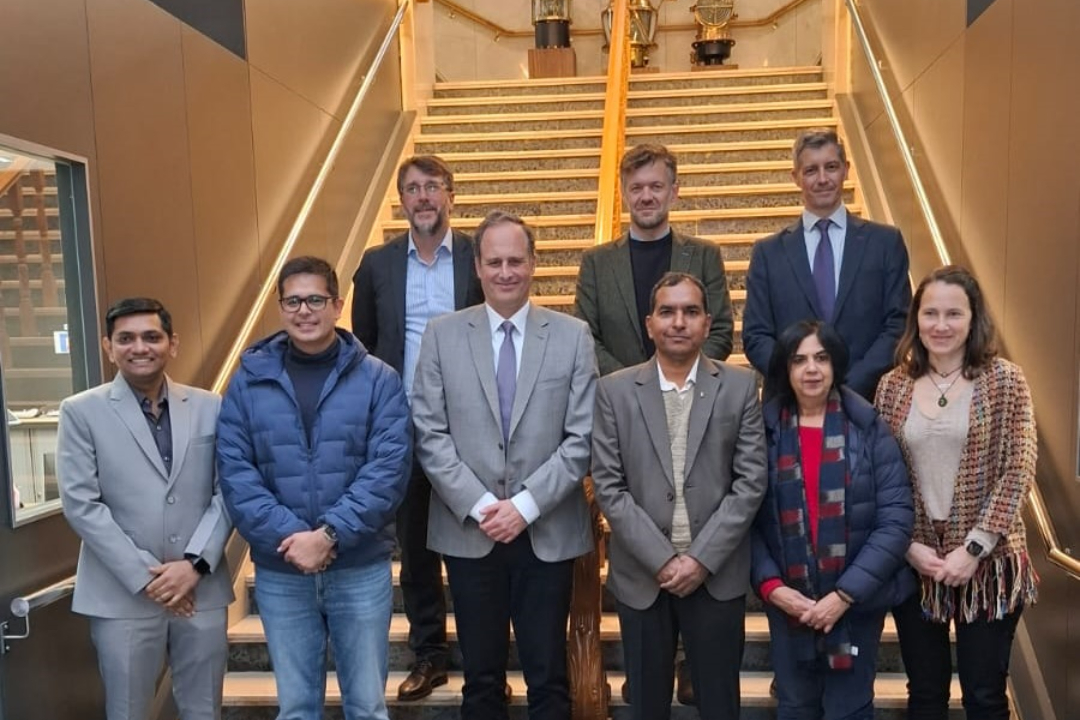
project kicks off with the first consortium meeting at the Port of Vigo. Led by
the EnergyLab Technological Center and financed by the Interreg Atlantic Area
Program 2021-2027, this project will conduct pilot tests for the application of
hydrogen and methanol as alternative energy sources in the fleets and vehicles
of ports in the Atlantic area (Spain, France, Ireland, and Portugal). The aim
is to integrate marine technologies and renewable energy into the maritime
sector.
In an
effort to be the first region in the world with net-zero emissions by 2050, the
European Union has established a plan to lead us toward an ecological
transition. The European Green Deal aims to reduce emissions by 50% compared to
1990 levels by 2030, and one area gaining attention for its transformation
potential is the maritime sector, acting as a gateway for people, goods, and
various modes of transportation. Although ports are better known as points of
connection within the maritime transport network, they also serve as multimodal
nodes, industrial areas, and commercial sites that play a fundamental role in
this decarbonization process.
Ports can
act as engines for this energy transition from two perspectives: as drivers of
more sustainable port activities and maritime transport, and as links in
maritime-port clusters, where they interact with stakeholders in different
value chains with common goals and interests. Therefore, Atlantic ports
position themselves as an excellent testing ground to apply the results across
different sectors, strengthening their competitiveness and decarbonization.
In this
context, the HYDEA project emerges to accelerate the development and
application of technologies based on the use of green hydrogen as an
alternative energy source in various types of fleets and vehicles. This marks a
step forward in researching and applying alternatives to current energy
sources. Green hydrogen comes from renewable energies with zero CO2 emissions,
making it a clean, sustainable fuel with zero pollution—an essential element
for the decarbonization of society in general and ports in particular.
The main
goal of the project is to evaluate, develop, and promote the use of
technologies based on green hydrogen from renewable energies (e.g., marine
energy) in ports in the Atlantic Area. This is achieved by accomplishing
several specific objectives to address the following challenges:
- - Promoting
a clear role for hydrogen in the strategic energy plans of ports.
- - Increasing
knowledge about various hydrogen production technologies viable for use in
ports.
- - Implementing
technological demonstrators that attract investor interest in viable business
models.
The HYDEA
project consortium, funded by the Interreg Atlantic Area Program 2021-2027,
brings together entities from Spain, France, Portugal, and Ireland under the
leadership of the EnergyLab Technological Center. It actively involves 4 ports,
1 technological center, 2 universities, and 3 companies: Port Authority of
Vigo, Port Authority of Seville, Société Portuaire Brest Bretagne,
Administração dos Portos do Douro, Leixões e Viana do Castelo, France Energies
Marines, National University of Ireland, Galway, University of Porto, Hive
Energy, Évolution Synergétique Automotive S.L., and Energy Observer
Developments. Additionally, they will have the support of thirteen associated
entities: seven Atlantic port authorities and six clean energy-promoting
entities, such as the Galician Hydrogen Association, the Galician Naval Cluster
Association, and the Energy Institute of Galicia, among others.
In the case
of Galicia, the Port of Vigo will serve as a test platform for the application
of technological solutions incorporating methanol and hydrogen in ships and as
fuel for vehicles. Methanol will be produced through CO2 hydrogenation, and the
feasibility of its use in ships will be assessed. As for hydrogen, it will be
tested as fuel for port fleet vehicles. The results obtained will allow the
development of instruments for application in different types of ship fleets
and vehicles, significantly reducing CO2 emissions and contributing to the
mitigation of the impact of climate change.
Furthermore,
the creation of the HYDEA Community, coordinated by the Port of Vigo, will
integrate stakeholders from the entire hydrogen value chain, including the
tertiary sector, universities, industry, and public administration. This
Community aims to be an international forum for sharing experiences, best
practices, and, in general, spreading the potential of hydrogen for sustainable
community development and achieving the decarbonization of society in general
and ports in particular.
The HYDEA
project is part of the Blue Growth strategy led by the Port of Vigo in its
commitment to clean energy. The institution, presided over by Carlos Botana
Lagarón, alongside the EnergyLab Technological Center, aims to play a
significant role in the development of green energies and their technological
application in both the maritime and terrestrial sectors. In line with its
environmental and sustainability policy, the Port Authority of Vigo will have a
hydrogen vehicle to demonstrate the possibilities offered by green energies.
HYDEA
represents a continued advance following the Julio Verne project, enabling the
establishment not only of Galicia's first public station for green hydrogen but
also the use of this fuel in land, maritime, and industrial mobility.